Learning how to make a great product video really comes down to understanding why they connect with people so well. It's a simple formula: a killer hook, a crystal-clear value demonstration, and an easy call-to-action—all crammed into 60 seconds or less. This isn't just a trend; it's a format built for how we all scroll and consume content now.
Why Short-Form Product Videos Are a Must-Have
The way people find and fall in love with products has fundamentally shifted. Gone are the days of passive browsing. Today, everyone wants quick, entertaining, and authentic video snippets. This change in consumer behavior is precisely why short-form video has become the new language of e-commerce and digital marketing.
The numbers behind this shift are staggering. YouTube Shorts, for instance, now pulls in over 70 billion daily views. Think about that reach.
We're also seeing videos under a minute achieve engagement rates around 50%, something static images or long-winded ads can only dream of. In a world where attention is everything, that’s huge. It's no surprise that 71% of video marketers report that clips under two minutes deliver the best results. They’re just long enough to get your message across without losing your audience. If you want to dive deeper, these video marketing statistics paint a very clear picture.
The Magic of Being Brief
The beauty of the short-form format is that it forces you to get straight to the point. There's no room for fluff. This constraint often pushes you to be more creative and, ultimately, more memorable. You're respecting the viewer's time, which is exactly what platforms like TikTok, Instagram Reels, and YouTube Shorts are designed for.
A truly effective product video doesn’t just show off an item; it tells a tiny story that can turn someone from a passive scroller into an interested buyer.
The goal isn't just to be seen; it's to be remembered. A 30-second clip that makes someone feel something or solves a tiny problem for them is infinitely more powerful than a five-minute video that just lists specs.
AI Is Tearing Down the Old Barriers
Not long ago, making a decent video was a major production. You needed expensive cameras, complicated editing software, and a ton of time. For a lot of small businesses and solo creators, it just wasn't feasible.
Now, AI tools are flipping the script entirely.
Platforms like Nereo, for example, can spin up a complete 60-second anime-style short from a single text prompt. This tech completely removes the traditional roadblocks of high costs and technical headaches. Suddenly, anyone with a good idea can produce a visually stunning product video. Your creativity, not your budget, is now the most important ingredient for success.
Lay the Groundwork: Your Video Strategy Comes First
Let's be honest, jumping straight into making a video without a plan is a recipe for wasted time and effort. It’s like trying to build a house without a blueprint. You might end up with something, but it won't be what you wanted. A solid strategy is what separates a product video that gets scrolled past from one that actually drives results.
So, before you even think about storyboards or AI prompts, you need to answer one crucial question: What is the single goal of this video?
Trying to sell, build brand awareness, and educate all at once just creates noise. Your message gets lost, and viewers get confused. Pick one primary objective, and let it guide every single decision you make from here on out.
What’s Your Primary Goal?
Are you trying to...
-
Drive Immediate Sales? If you want a direct purchase, the video needs to be sharp and to the point. Focus on the single most compelling benefit of your product and cap it off with a strong, urgent call-to-action like “Shop Now” or “Limited Stock Available.”
-
Boost Brand Recall? Maybe the goal is longer-term. If you want people to remember your brand days later, your video needs to make an emotional connection. Tell a memorable story, use humor, or go for a unique visual style—like a striking anime aesthetic—that sticks in their mind.
-
Educate Your Audience? Sometimes, a product has a clever feature that isn't immediately obvious. A quick how-to or a problem-solution video can build incredible trust. It positions you as a helpful expert, which often leads to sales down the road.
A well-planned video kicks off a powerful growth loop. It's a simple but effective cycle.
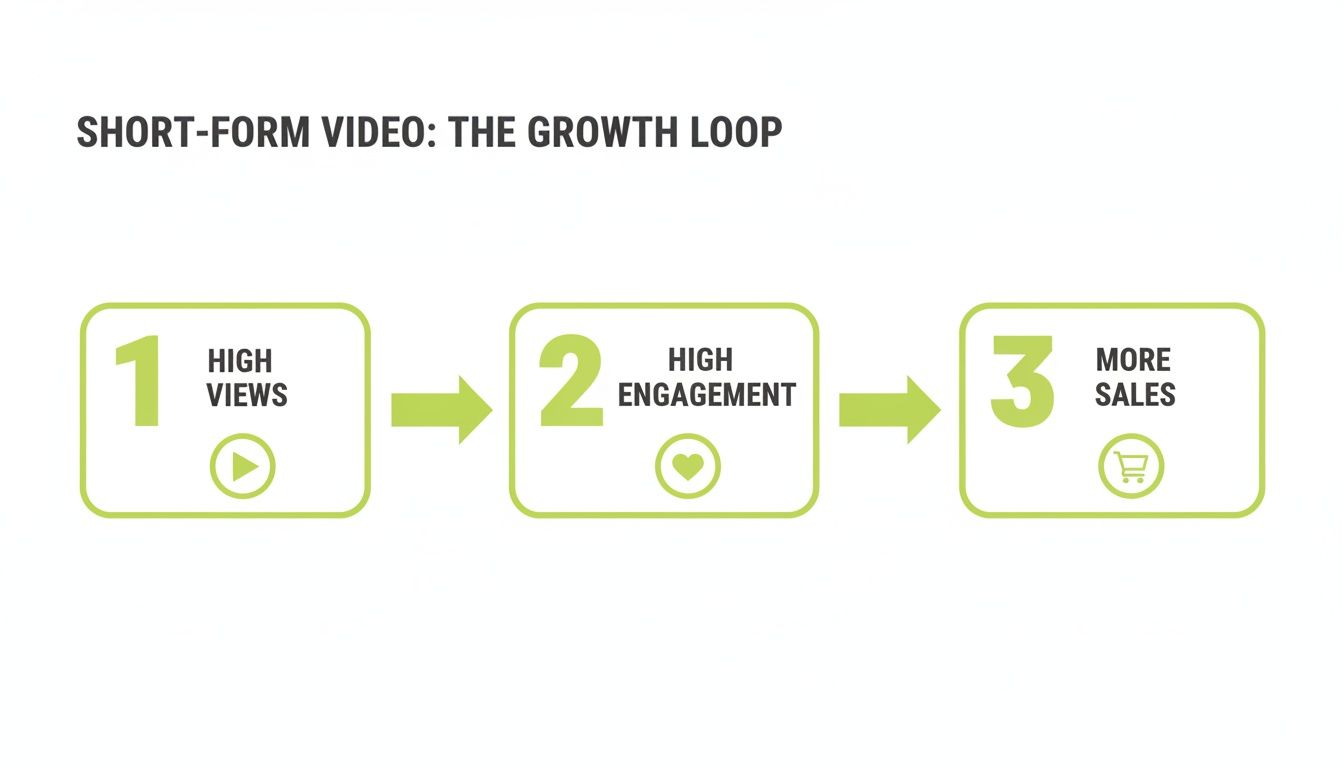
As you can see, getting those initial views leads to real engagement, which in turn fuels more sales. It all starts with that first strategic decision.
Architecting Your 60-Second Story
With your goal locked in, it’s time to build the narrative. For the blink-and-you'll-miss-it world of short-form video, a simple three-act structure works wonders. It's built for short attention spans and is your best bet for grabbing and holding on to a viewer's interest.
To make this super practical, here’s a blueprint you can follow. Think of it as your minute-long map to success.
| Your 60-Second Video Blueprint | ||
|---|---|---|
| Segment (Time) | Purpose | Content Example (for a skincare product) |
| The Hook (0-3 seconds) | Stop the scroll. Create immediate intrigue or relatability. | A quick shot of someone looking frustrated in the mirror. Text overlay: "Tired of 10-step skincare routines?" |
| The Value (4-50 seconds) | Show, don't just tell. Demonstrate how your product solves the problem from the hook. Focus on benefits, not features. | The product is shown being used easily. Quick cuts to visuals of clear, glowing skin. The message is simple: great results, no hassle. |
| The CTA (51-60 seconds) | Tell them exactly what to do next. Be direct and clear. | A clean shot of the product bottle with a direct call-to-action: "Get your glow back. Tap the link to shop!" |
A great product video isn't just an ad; it's a 60-second story with a beginning, middle, and end. The hook makes them stop, the value makes them watch, and the CTA makes them act.
Choosing an Aesthetic That Sticks
Your video’s visual style is just as important as the story it tells. The right aesthetic makes your content instantly recognizable in a sea of sameness and builds your brand identity with every view.
Here are a few popular routes you can take:
- The UGC Vibe: User-generated content feels authentic because it looks authentic. This lo-fi, "real customer" style is fantastic for building trust and social proof. It feels less like an ad and more like a genuine recommendation.
- Polished and Professional: Crisp camera work, great lighting, and slick editing can position your brand as premium and high-end. This is perfect for products where quality and trust are paramount.
- Distinctive Animation: This is where you can let your creativity run wild. An AI-powered anime style, for instance, can tell a story that live-action just can't touch. Imagine a brand launching a new sneaker with a short clip of an anime hero outrunning a kaiju—it's memorable, unique, and incredibly shareable. For more ideas on using creative video, check out some of the strategies on the Nereo blog.
By nailing down your goal, structuring your story, and choosing a distinct aesthetic before you start creating, you're setting yourself up for a win. This strategic foundation makes the entire video creation process smoother, faster, and way more effective.
Bringing Your Vision to Life with AI
Alright, this is where your planning pays off. You've nailed down your strategy—you know the goal, you have a story, and you've picked an aesthetic. Now it's time to turn that blueprint into a living, breathing product video.
Not long ago, this part of the process meant dragging out cameras, setting up lights, and blocking out a full day (or more) for editing. Now? A single, well-written sentence can do most of the heavy lifting for you.
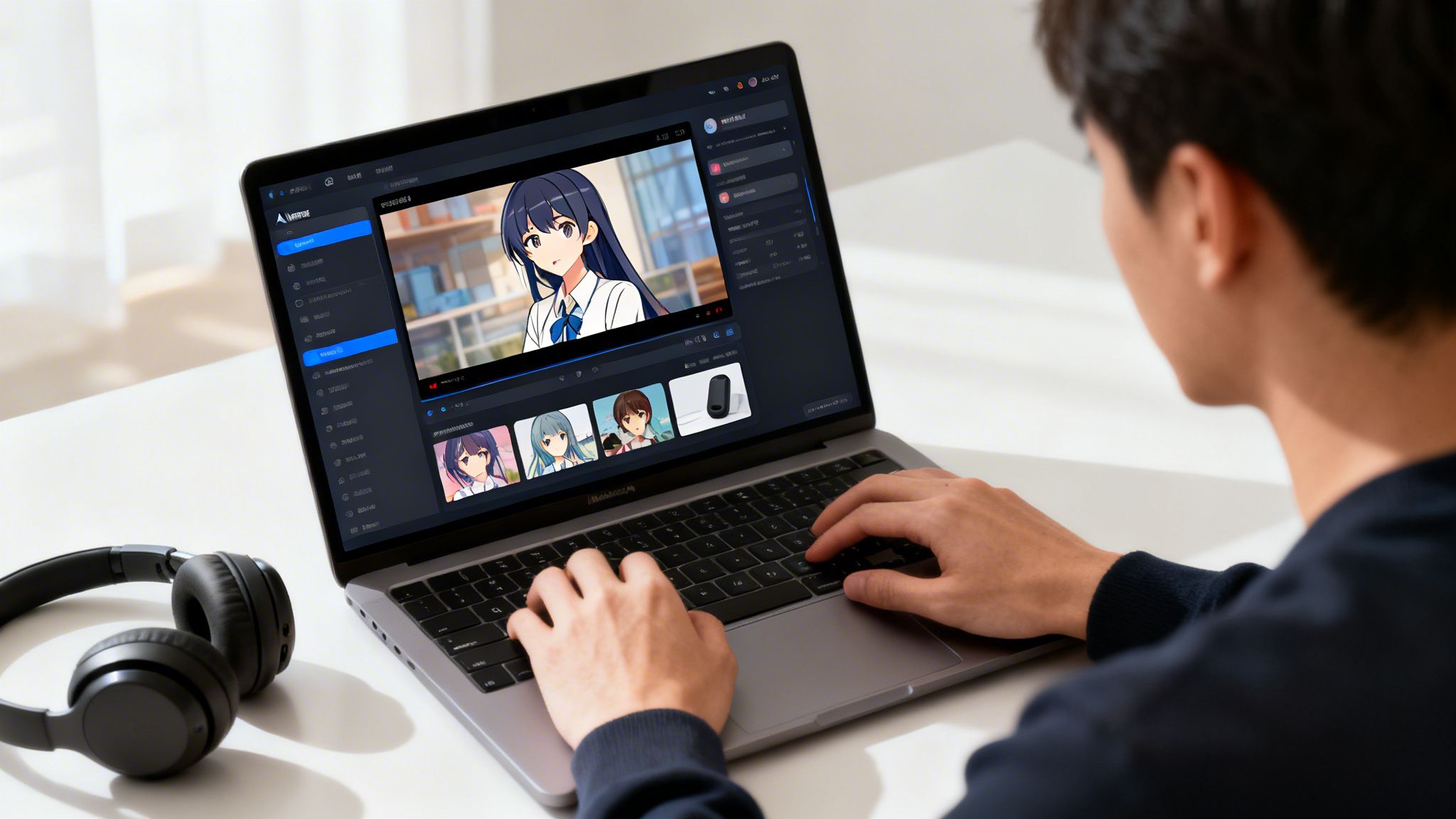
The path from a simple idea to a finished video has never been shorter, and that’s all thanks to AI video generation. With a tool like Nereo, your script or storyboard becomes the direct input. This isn't just a time-saver; it unlocks creative possibilities that used to be out of reach for most brands.
The Art of the Perfect Prompt
At the heart of any AI-generated video is the prompt. Think of it as your director's notes for the AI. A vague prompt will get you a generic, forgettable video. But a specific, descriptive prompt? That produces a visual story that feels intentional and truly captures your vision. The quality of what you put in directly shapes what you get out.
So, how do you write a prompt that actually works? From my experience, a great prompt has four key ingredients.
- The Character: Who is the star of your show? Go beyond "a person" and describe their look, their mood, and what they're doing.
- The Product: How does your product fit into the narrative? Show it being used, solving a problem, or being the hero of the moment.
- The Setting: Where is this all happening? A cozy café, a futuristic city, a serene forest—the environment is everything for setting the tone.
- The Action: What’s the story? Lay out the sequence of events, from the initial hook to the final resolution.
This simple formula gives the AI all the context it needs to build a coherent and compelling story from scratch.
Your prompt is the DNA of your video. Every detail you include—from the character's expression to the time of day—shapes the final outcome. Be specific, be descriptive, and be clear about the story you want to tell.
Crafting Prompts for Different Products
Let's get practical. The best way to get the hang of prompt engineering is to see it in action. The core structure stays the same, but the details shift based on what you're selling.
Example 1: Tech Gadget (Wireless Earbuds)
Imagine you're marketing a pair of sleek, noise-canceling earbuds. Your goal is to show how they create a personal escape from a chaotic world.
- Weak Prompt: A person listening to music with earbuds.
- Strong Prompt: A young woman with vibrant pink hair sits on a crowded, noisy subway car. She puts in sleek, white wireless earbuds and the chaotic world around her fades into a soft blur. She closes her eyes and smiles, now in her own peaceful world of music. The style is modern anime with dynamic camera movements.
See the difference? The second prompt gives the AI a full scene to work with: a clear character, a relatable problem, the product as the solution, and even a specific visual style.
Example 2: Beauty Product (Hydrating Face Mist)
Now, let's say your product is a refreshing face mist for that mid-day slump. You want to convey instant revitalization.
- Weak Prompt: Someone using face mist.
- Strong Prompt: An office worker looks tired under harsh fluorescent lights, slumping over his keyboard. He reaches for a minimalist green bottle and spritzes the hydrating face mist. A wave of refreshing blue energy washes over him, his expression brightens, and he sits up, re-energized. The art style is clean, vibrant anime with a focus on glowing particle effects.
This prompt tells a mini-story of transformation, which is far more engaging than just showing the product in use. Learning how to translate your product's benefits into a narrative prompt is a crucial skill for today's marketers. If you want to dive deeper, you can find detailed guides on how to make the most of text-to-video AI technology.
Selecting Your Visual Style
Beyond the story itself, your visual aesthetic is one of the most powerful tools you have to stand out. An AI generator like Nereo offers a range of anime art styles, and each one brings its own distinct personality to the table. Choosing the right one is key to matching your brand's voice.
Here’s a quick breakdown of how to think about it:
| Style | Best For Brands That Are... | Why It Works |
|---|---|---|
| Modern & Sleek | Tech-focused, minimalist, forward-thinking. | Clean lines and vibrant colors convey a sense of precision and quality. |
| Shōnen (Action-Oriented) | High-energy, bold, and adventurous. | Dynamic action sequences and expressive characters create excitement. |
| Slice of Life | Relatable, cozy, and community-focused. | Softer colors and everyday settings build a warm, authentic connection. |
Your choice of art style is a strategic one. A gaming accessories brand might kill it with a Shōnen style, while a brand selling artisanal coffee would probably feel more at home with a "Slice of Life" aesthetic. The goal is to pick a style that reinforces who you are as a brand and connects with your audience. When you get this right, your product videos aren't just seen—they're felt. And that’s what creates a lasting impression and drives real results.
Optimizing Your Video for Each Social Platform
<iframe width="100%" style="aspect-ratio: 16 / 9;" src="https://www.youtube.com/embed/MM-MPS57qKA" frameborder="0" allow="autoplay; encrypted-media" allowfullscreen></iframe>
So you've created a fantastic product video. That's a huge step, but hitting "publish" is really just the start. A video that explodes on TikTok might completely fizzle out on YouTube Shorts. Why? Because every platform is its own little world with unique algorithms, user expectations, and a distinct culture. The old "one-size-fits-all" strategy just doesn't cut it anymore.
To get real results, you have to think like a native on each platform. This isn't just about re-uploading the same file everywhere. It's about fine-tuning your content to speak the language of TikTok, Instagram Reels, and YouTube Shorts. It might seem like a small extra step, but trust me, it makes a world of difference in your final numbers.
Tailoring Your Video for Maximum Impact
Sure, all three big players use a vertical, 9:16 aspect ratio, but that's pretty much where the similarities end. The "vibe" is completely different on each app, and your optimization strategy has to match.
-
TikTok: This is the land of trends. Success here often comes down to how fast you can jump on trending audio, filters, and video formats. The audience craves authenticity and entertainment—not a polished commercial. Your product needs to feel like a natural part of a funny skit or a relatable story, not a forced ad.
-
Instagram Reels: While trends matter here too, Reels definitely has a more polished, aesthetic feel. Think beautiful transitions, high-quality lifestyle shots, and content that fits a carefully curated brand image. Inspirational and visually stunning content really shines.
-
YouTube Shorts: This platform is all about direct, value-driven content. Quick tutorials, product "hacks," and straightforward demos are gold here. People on YouTube are often looking to learn or solve a problem, so clear, concise information wins the day.
The core video file might be the same, but how you package it is everything. Your video is the product; the caption, audio, and text overlays are the packaging. You wouldn't use the exact same box for every market, right?
The Power of Native Features and Trending Audio
There's a reason each platform gives you a suite of in-app editing tools—their algorithms are built to reward content that uses them. Adding text overlays, stickers, or polls directly within the app can give your video a serious boost in visibility and engagement.
Native text is particularly important for grabbing viewers who watch with the sound off (which is more people than you'd think). Use it to flash your main benefit or ask a compelling question within the first two seconds.
And don't sleep on trending audio. It’s one of the most powerful discovery tools you have, especially on TikTok and Reels. When you use a popular sound, the platform automatically pushes your video to people who've already interacted with that audio. It’s like a cheat code for reaching a whole new, highly engaged audience.
Crafting Captions and Calls to Action That Convert
Your caption is where the conversation starts. Don't just describe what's happening in the video. Ask a question. Encourage people to share their own stories. Prod them to tag a friend who needs to see your product. A video with a lively comment section is way more likely to get pushed out by the algorithm.
Your Call-to-Action (CTA) also needs to be sharp, clear, and tailored to the platform.
| Platform | Effective CTA Strategy | Example |
|---|---|---|
| TikTok | Funnel viewers to the link in your bio. Use on-screen text like "Link in Bio!" | "Obsessed with this? Grab yours from the link in our bio!" |
| Use the "Shop" tab and product tags for seamless, in-app purchasing. | "Tap the product tag to shop this look instantly! 🛍️" | |
| YouTube Shorts | Pin a comment with a direct link to your product or a related full-length video. | "Find the full tutorial in the pinned comment below! 👇" |
By adapting your CTAs to how each platform actually works, you remove friction and make it incredibly easy for an interested viewer to become a customer. These simple tweaks can be the difference between a passive view and an active sale. Knowing how to add the right finishing touches, like custom video effects, can also give your content that extra pop before it goes live. Ultimately, winning at short-form video is all about blending great creative with a smart, platform-aware distribution plan.
Measuring Performance and Refining Your Strategy

Hitting "publish" doesn't mean the work is over. In many ways, it's just beginning. Now, you get to see how your video performs in the wild and start turning your creative efforts into a predictable, results-driven content machine.
This is where you stop guessing what your audience wants and start listening to what their actions tell you they love. This feedback loop is the secret sauce that separates a one-hit wonder from a creator who builds a genuinely engaged community.
Moving Beyond Vanity Metrics
It's easy to get caught up in the big, flashy numbers. A video with 100,000 views sounds fantastic, but what if nearly everyone dropped off after the first two seconds? Did it really accomplish anything for your brand? The real story is always in the details.
To get a true picture of your video's impact, you need to zero in on a few core metrics:
- Average Watch Time: Honestly, this might be the most important metric of all. It tells you exactly how long people are sticking around. A high watch time is a massive signal to the platform's algorithm that your content is high-quality, which can lead to a huge boost in reach.
- Audience Retention: This is where you get granular. The retention graph shows you, second by second, where viewers are dropping off. Did you lose a huge chunk of them after your hook? Did they bail right before your call-to-action? This data is pure gold for finding the weak spots in your storytelling.
- Engagement Rate: This is the sum of all interactions—likes, comments, shares, and saves. High engagement tells the algorithm your video is sparking a conversation, making it much more likely to be pushed to new audiences. Comments are especially valuable; they show people are actively thinking about your content.
Don't get fooled by view counts alone. A video with 10,000 views and a 70% average watch time is infinitely more valuable than one with 100,000 views and a 10% watch time. The first one built a connection; the second one just interrupted someone's scroll.
Interpreting the Data to Refine Your Approach
Once you have the numbers, the real skill is translating them into actionable insights. Think of your analytics dashboard less like a report card and more like a treasure map pointing you toward your next winning video.
For example, did your video get a fantastic watch time but almost no clicks on your CTA? That's a great sign! Your hook and story were compelling, but your call-to-action might have been too weak or unclear. For the next video, try making the CTA more direct or dropping it a bit earlier.
Or maybe the opposite happened—tons of shares, but the comments are full of confused questions. This probably means your visuals were eye-catching, but the core message about your product got lost in the shuffle. That's a clear signal to focus on clarity in your next script.
Smart Distribution and Timing
How and when you post are just as critical as what you post. Every platform has its own rhythm, and catching the wave at the right time can give your video the initial velocity it needs to take off.
Optimal Posting Times
While this always depends on your specific audience, some general patterns have emerged. The best source of truth is always your own analytics dashboard (Creator Tools on TikTok, Insights on Instagram), which shows you exactly when your followers are most active.
| Platform | General Peak Times |
|---|---|
| TikTok | Early morning (6-10 AM) and late afternoon (4-9 PM) |
| Instagram Reels | Weekday lunch hours (11 AM - 2 PM) and evenings |
| YouTube Shorts | Late afternoon (2-6 PM) and evenings (7-10 PM) |
Effective Hashtag Strategy
Think of hashtags as signposts that help the algorithm categorize your content and serve it to the right people. The goal isn't to spam every trending tag you see, but to use a balanced, strategic mix.
A simple, effective formula is:
- Broad Tags (1-2): High-volume tags for your general industry (e.g.,
#skincare,#techgadgets). - Niche Tags (2-3): More specific tags that describe the video's theme or your product's benefit (e.g.,
#acnesolution,#retrogaming). - Branded Tag (1): Your own unique hashtag to build community (e.g.,
#NereoAI).
By consistently measuring these key metrics and refining your distribution, you move from just making videos to building a powerful growth engine. Each video becomes a small experiment, fueling a cycle of continuous improvement that gets you closer to mastering product videos that truly connect and convert.
Common Questions About Making Product Videos
If you're jumping into product videos, you've probably got some questions. Everyone does. Whether you're running a marketing team or you are the marketing team, a few key answers can make all the difference. Let's clear up some of the most common things people ask when they're getting started.
How Long Should a Product Video Be?
For social platforms like TikTok, Instagram Reels, and YouTube Shorts, think short and sweet. The ideal spot is somewhere between 15 and 60 seconds. Your entire job is to stop someone's thumb from moving.
Those first three seconds are everything. That's your make-or-break window to hook someone before they're gone. While you can use the full minute, the sweet spot for engagement often lands right around the 30-second mark. It’s just enough time to land a solid hook, show what your product does, and tell them what to do next without overstaying your welcome.
Do I Need Expensive Equipment?
Nope. Absolutely not. That's one of the biggest myths that holds people back.
Years ago, you needed a fancy camera and lighting to look professional. But today, authenticity often connects better than a slick, overproduced ad. Your smartphone is a powerhouse and can shoot fantastic live-action video.
Even better, new tools are making physical gear almost obsolete.
With an AI video generator like Nereo, you don't need a camera, lights, or even a real-world location. You can literally type out an idea and get a complete, story-driven animated video. This gives you a polished, unique look without the headache and cost of a traditional film shoot.
The takeaway? Your creativity is now worth more than your camera.
What Are the Most Important Elements to Include?
Every great short-form video has the same DNA. It doesn't matter what you're selling or where you're posting it; you need these three things. Get them right, and you're golden.
- A Killer Hook: You have 1-3 seconds to grab someone. This could be a wild visual, a relatable problem flashed on screen, or a question that piques their curiosity.
- Clear Value: Don't list features. Show the result. How does your product solve a real problem or make someone's life better? The focus has to be on the benefit for them.
- A Strong CTA: What do you want them to do? Tell them. "Shop Now," "Learn More," "Follow for more"—be direct. An amazing video with no call-to-action is a missed opportunity.
How Can I Make My Product Video Stand Out?
Millions of videos are fighting for attention every day. If you just copy what everyone else is doing, you'll be invisible. The trick is to find an angle that makes people remember you.
Think beyond another standard unboxing clip. A different visual style can be a game-changer.
For instance, using an AI anime generator can instantly set your brand apart with an art style people aren't seeing from your competitors. It's a fantastic way to tell a small story that might be difficult or cheesy to pull off with live-action.
Story is your other superpower. Build a tiny narrative that makes someone feel something—humor, surprise, relief—instead of just feeding them facts.
And finally, play by the platform's rules. Using trending audio and formats tells the algorithm your content is relevant, which helps push it to more people. Combine a unique style with a compelling story, and your video won't just get views—it'll get remembered.
Ready to create stunning product videos without any of the traditional hassle? Nereo can turn your ideas into complete, 60-second anime shorts from a single prompt. Try it free today!